Could you tell us a bit more about your project?
Climate change imperatives are pushing the world to transition from the use of fossil fuels (such as coal- lignite, oils and gas) to clean energy sources (such as wind turbines, solar parks and biogas). The establishment of clean energy sources requires huge swathes of land for turning brownfields into greenfields. This demand for land has seen the establishment of these clean energy sources intersecting with other land uses resulting in conflicts over land. To minimize these conflicts, governments and renewable energy companies are now targeting closed mines for the establishment of Renewable Energy Hubs. However, this also raises many social and environmental questions. Therefore, my project examines the social aspects of repurposing mines for renewable energy. It seeks to answer how these processes impact communities and environments and how these impacts can be mitigated. I have been conducting this research in Australia, and now I am proposing to work on a similar topic in Germany to bring in a comparative approach. Australia and Germany are two different countries with different socio-economic histories and structures that shape similarities and differences in terms of impact. It is important to compare experiences across regions in order to gain an understanding of the different distributions of impact, which is essential for policymaking and implementation. Also, this comparative approach drives the need for collaborative research among scholars working in Germany and Australia.
What are your plans for future collaboration with colleagues in Bayreuth and Germany?
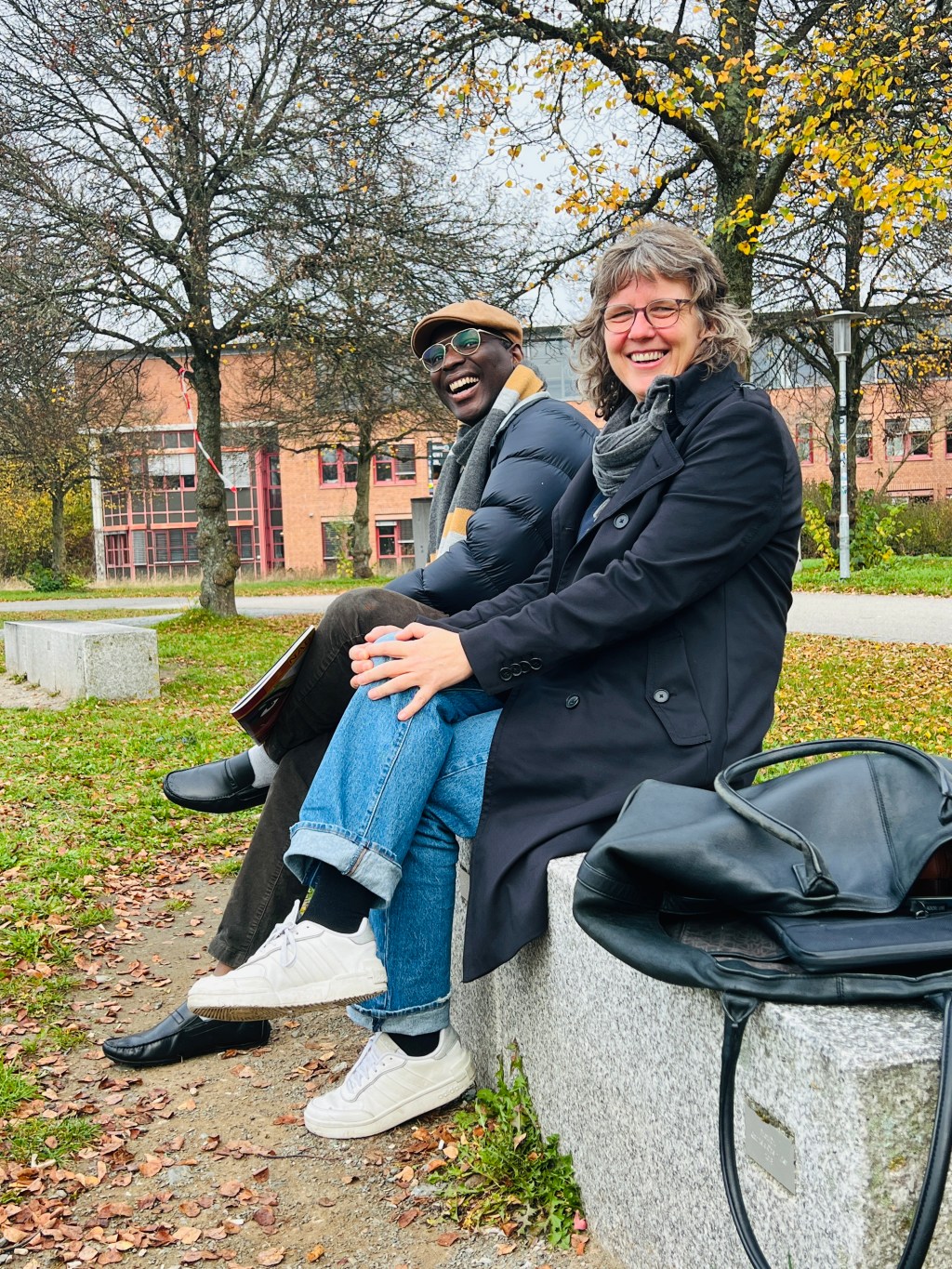
My recent trip to Germany was very rewarding. It went better than I expected. I had the pleasure of being hosted by Professor Katharina Schramm (Chair of Social and Cultural Anthropology) at the University of Bayreuth. We are both anthropologists interested in issues at the intersection of the environment and communities. In addition to being a collaborator on this project, Professor Katharina Schramm also introduced me to several potential collaborators from the University of Bayreuth and the Martin Luther University. These potential and interested collaborators come from different disciplines, including environmental studies and engineering, which is advantageous in terms of building a transdisciplinary team. Transdisciplinarity is key in that we get to answer research questions from different angles. I had the opportunity to meet these potential collaborators in person and online and had lengthy and fruitful discussions. Two results emerged from our interactions: a) to co-author a perspective article together; b) to apply for a workshop grant for 2025 either within UBT sources or external. This would be the basis for applying for larger grants in Germany and beyond.
What do you associate with transdisciplinary research?
I am looking forward to this collaboration as it is an opportunity for transdisciplinary research. Transdisciplinary research is an excellent opportunity to answer complex questions about energy transition processes from different angles. It is an opportunity for getting answers to energy transition activities that are impacting communities and causing huge gaps between the rich, middle class and the poor. It intersects different methodologies to generate complex data that may be difficult to obtain from a particular discipline. Also, transcapillary research is crucial in that it brings together experts from different fields to share and exchange ideas over a lengthy period of time. We will be able to create a collaborative knowledge hub that will be co-hosted by all transdisciplinary partners. This will be a freely accessible data sharing platform where individuals interested in energy transition issues can have access to comparative data between Germany and Australia.
What was your best experience during your stay?
I stayed at UBT for 3 weeks (21 days). I received a warm welcome from my host Professor Katharina Schramm and Janine Nagat. Katharina commenced assisting me way before my arrival at UBT. She helped me build a stronger research proposal that we submitted as part of this application and we obtained the funding from the Bayreuth Humboldt Centre (BHC). After winning the grant, she continued corresponding with me ensuring that I have all the resources I need in preparation of my journey to UBT. Upon my arrival at UBT, we had several meetings of engagement over lunch at the Cafeteria and in her office about my research and collaboration plans. And these discussions were very fruitful and rewarding. I also had the pleasure to share an office with Dr Nasima Selim and interact with other departmental members like Prof Jia Hui Lee. These individuals made my stay at UBT enjoyable. It was a home far from home. I had several engaging and intellectual discussions with these individuals that were very impactful in my life even though it was for a short period. These are the major highlights of my trip: a) I was granted a spacious office with a heater to keep me warm in the freezing weather. I also had access to the kitchen where I constantly made coffee and tea to keep the engine running in cold weather. It was my first time in Europe and I had never lived in such cold weather. I was nervous but the team ensured that I was warm. b) I was invited to luncheons and dinners by different researchers at UBT who were interested in learning more about my research. Some of these researchers conduct fieldwork in Africa, where I am originally from. This helped grow my network that can be leveraged on for future collaborations. c) I had an opportunity to present at the Anthropology Lecture Series, where I engaged with the audience and answered very constructive comments they had regarding my project. I would encourage other researchers from other parts of the world to contact professors at UBT for possible hosting arrangements and apply for the BHC grants so that they get the kind of experience I had. d) Another key highlight was attending the weekly Anthropology of Global Inequalities Seminar organized by my host Katharina Schramm. This community of anthropologists engages in topical issues affecting the world today to ponder on answers and solutions to these problems.
 ANTHROPOLOGY OF GLOBAL INEQUALITIES
Leave a comment